
How to vibe codeSage
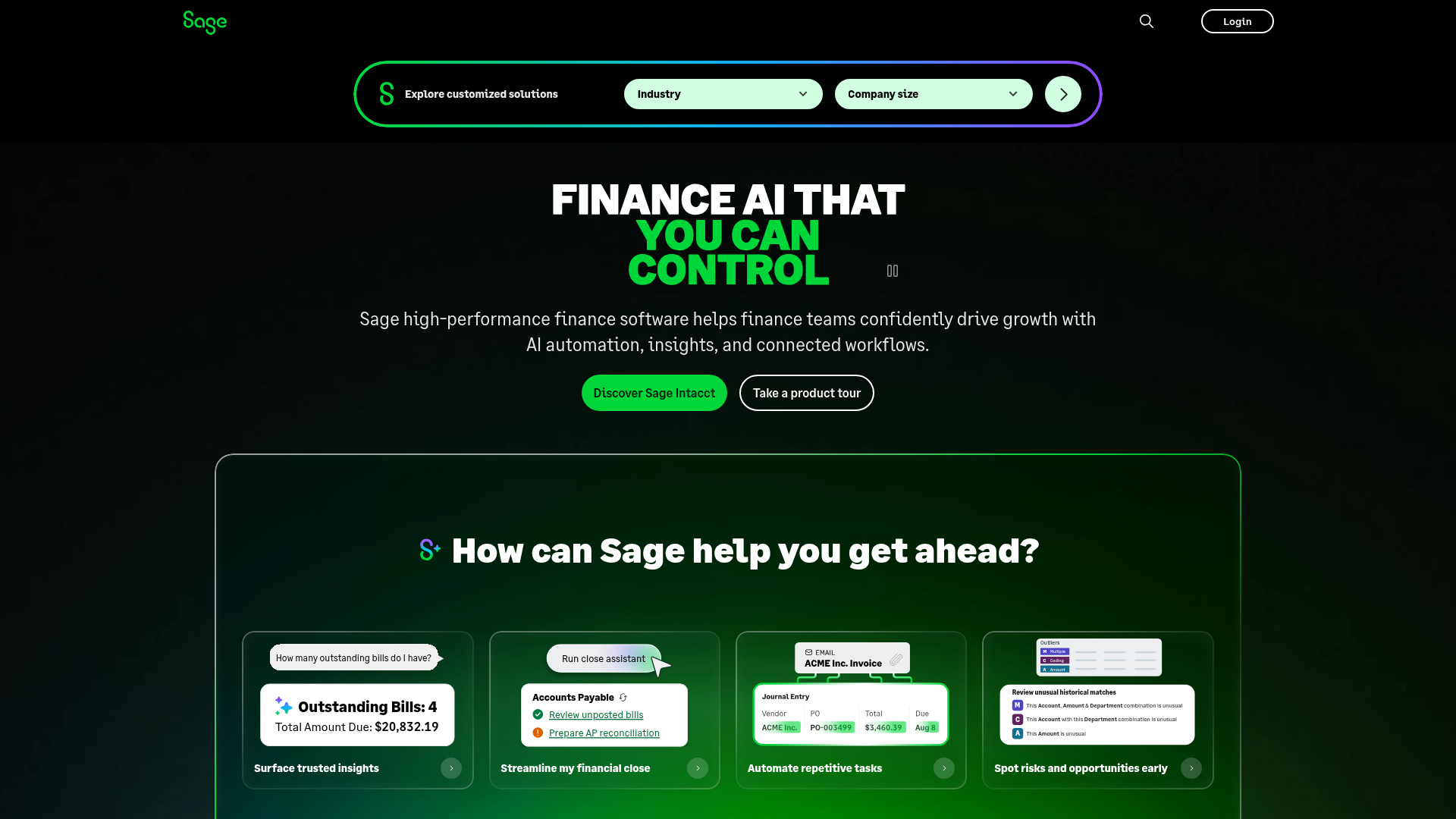
High-performance finance software with AI automation and connected workflows
sage.com ↗Enterprise SaaS & Financial Management
The verdict: can you vibe code Sage?
Keep paying for enterprise financial infrastructure, because vibecoding a multi-entity general ledger with GAAP compliance and financial AI agents is a fool's errand.
Sage is a multi-billion dollar enterprise software titan backed by 45 years of domain expertise, strict regulatory compliance certifications, and complex double-entry accounting engines. While you can use an AI coding agent to spin up a basic CRUD database with React tables representing a fake P&L, you cannot replicate an audit-grade general ledger, multi-currency consolidations, or secure financial assurance agents in a weekend or even a solid side project. A single floating-point error or compliance oversight in ledger math will corrupt your books entirely. If you want a personal budgeting tool, build a thin wrapper over SQLite; if you need Sage, pay for it.
Estimated effort: 6+ months of full-time work (for a fractional subset)
What you can't replicate
- Auditable, immutable GAAP/IFRS double-entry general ledger compliance
- Enterprise multi-entity consolidation rules and inter-company eliminations
- Deep institutional security, SOC 2 compliance, and secure banking integrations
- Decades of tested tax engines across global economic zones
Founded
1981
Raised
—
Team
11,000 to 11,500
Cheapest paid tier
—
What Sage does
Global cloud financial management and enterprise resource planning platform featuring automated general ledgers, AP automation, multi-entity consolidations, and AI financial agents.
Core features
- Multi-entity general ledger with dimensional tagging
- Automated accounts payable (AP) invoice processing and coding
- AI financial intelligence agent for natural language querying
- Real-time financial statement generation (P&L, Balance Sheet, Cash Flow)
- Automated monthly close checklist and task tracker
- Anomaly detection on journal entries and purchase orders
- Multi-currency conversion and consolidation engine
The business
Pricing
- Sage Intacct Custom QuoteCustom
Funding
Unknown / bootstrapped
Pay vs build, cumulative
Break-even at month 1 — after that, every month is money kept.
The hard parts of vibe coding Sage
- Building an immutable, GAAP/IFRS-compliant double-entry general ledger with zero computational tolerance for floating-point rounding errors
- Designing a high-performance multi-dimensional tagging and dynamic rollup architecture that queries massive transaction sets without table locking
- Orchestrating agentic AI workflows that execute database queries safely against structured financial records without hallucinating numbers
- Handling complex multi-entity eliminations, inter-entity transactions, and real-time currency exchange conversions
How to vibecode Sage
Prerequisites
Node.jsfree
Required runtime for executing the full-stack TypeScript application framework.
GitHubfree
Version control repository host for managing the codebase with AI coding tools.
CursorFree tier / $20/mo Pro
AI-native code editor to navigate and write complex database schemas and accounting logic.
AI coding tools
Recommended stack
| Frontend | Next.js |
|---|---|
| Backend | Next.js API Routes |
| Database | Turso |
| Auth | better-auth |
| Payments | None |
| Other | Vercel AI SDK, OpenAI API |
Hosting & infrastructure
| Cloudflare | Hosting the Next.js personal financial frontend and API edge functions | $0-5/mo |
Build guide
01Scaffold Next.js App with Turso and Better-Auth
Initialize a full-stack Next.js project configured with Turso SQLite and better-auth for single-user personal access.
Create a new Next.js project using TypeScript and Tailwind CSS. Configure Turso as the database driver using libSQL, and set up better-auth for secure user authentication with a single-user login setup. Establish the initial database schema migration files for users, business entities, and accounts with proper foreign key constraints to support a foundational double-entry accounting structure.02Build the Double-Entry General Ledger Data Model
Implement database tables and server actions for Chart of Accounts, Journal Entries, and transactional postings.
Build the database schema and server actions for an immutable double-entry general ledger. Create tables for 'accounts' (id, name, type [asset, liability, equity, revenue, expense], normal_balance), 'journal_entries' (id, entity_id, date, reference, description, status), and 'journal_lines' (id, entry_id, account_id, debit, credit). Write a validation utility function that guarantees total debits strictly equal total credits for every posted journal entry before committing to the database.03Develop Multi-Entity Dimensional Tracking
Add support for multiple business entities and multi-dimensional tagging (department, location, project).
Extend the general ledger schema to support multi-entity hierarchies and dimensional tagging. Add 'entities' and 'dimensions' tables, and link journal lines to optional dimension tags (department, location, project). Implement a rollup query builder service that aggregates balances dynamically by entity or dimension tag without locking tables.04Construct Financial Statements Dashboard
Build real-time reporting views for Income Statement (P&L), Balance Sheet, and Trial Balance.
Create a financial reporting dashboard in Next.js with Tailwind CSS. Implement server-side calculation engines that generate a real-time Trial Balance, Income Statement (Profit & Loss), and Balance Sheet based on posted journal entries within a given date range. Render clean financial statement tables with drill-down capabilities into underlying transaction lines.05Integrate AI Financial Intelligence Agent
Incorporate the Vercel AI SDK and OpenAI API to allow natural language querying of financial records.
Integrate the Vercel AI SDK and OpenAI API to create a 'Finance Intelligence' conversational sidebar. Provide the LLM with structured tool definitions (e.g., query_account_balance, get_income_statement, list_recent_anomalies) so it can safely query the Turso database using parameterized queries and answer natural language questions about financial performance with auditable figures.
Cost vs paying for Sage
What will you build it with?
Starting total with Claude Code$0 one-time
Starting costs (one-time)
- Custom domain name$12 one-time
- OpenAI API starter credits$10 one-time
Total~$22 one-time
Ongoing costs (monthly)
- AI coding tool subscription$20/mo
- Cloudflare / Turso infrastructure$0/mo
- OpenAI API usage for financial agent~$5/mo
Total~$25/mo
Paying for Sage
$500+/mo (Enterprise custom quote)
Your time to build
120+ hours (Fractional personal subset)
AI tool credits
$20/mo (Cursor Pro / Claude Code)
Break-even
Not applicable (replicates an un-buyable fractional subset)
Own Sage? Wear the score
Put this badge on your site or README — it links back to this report.
<a href="https://vibeityourself.com/app/sage"><img src="https://vibeityourself.com/badge/sage" alt="Sage vibe-codeability score" /></a>[](https://vibeityourself.com/app/sage)Vibe code Sage: FAQ
- Can you vibe code Sage yourself?
- Don't bother — 12/100 vibecodeable. Keep paying for enterprise financial infrastructure, because vibecoding a multi-entity general ledger with GAAP compliance and financial AI agents is a fool's errand.
- How long does it take to vibe code Sage?
- 6+ months of full-time work (for a fractional subset) — roughly 120+ hours (Fractional personal subset) of hands-on time with an AI coding agent.
- How do you build your own Sage?
- Scoped to personal use: Next.js on the front, Next.js API Routes behind it, Turso for data. Follow the 5-step build guide on this page — each step has a paste-ready prompt for an AI coding agent.
- How do you code your own Sage without being an expert?
- Use an AI coding tool (Claude Code or Cursor) and work in small steps: scaffold, data model, core screens, then deploy. Realistic effort: 6+ months of full-time work (for a fractional subset). The prompts on this page are written so the AI does the heavy lifting.
- How much does it cost to vibe code Sage instead of paying?
- About ~$22 one-time to start and ~$25/mo to run, versus $500+/mo (Enterprise custom quote) for Sage. Break-even: Not applicable (replicates an un-buyable fractional subset).
- What stack should you use to vibe code Sage?
- Next.js; Next.js API Routes; Turso; plus Vercel AI SDK, OpenAI API.
Methodology
This report was generated by VibeItYourself's standard pipeline: we scrape sage.com (content, branding, screenshot), deep-research the company with AI + web search (pricing, funding, team, engineering complexity), then score rebuild feasibility 0–100 against the same rubric used for every app — scoped to a personal-use clone, not a competing business. How scoring works. Verdicts are honest by design: what you can't replicate is listed above.
Last verified: